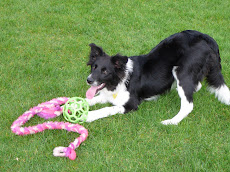
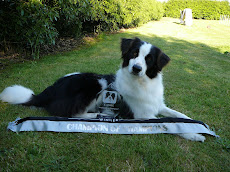
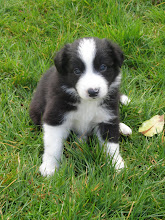
At DAWG in July 2009
Thursday, July 16, 2009
Saturday, May 23, 2009
Thursday, January 8, 2009
Sharky's diary Chapter 4-14
I have been a bit slack with this blog, partially because I have been enjoying lots of shows with Sharky and Cannon, and partly because I have had to earn a living to pay for my agility addiction!
During the time I have been slack, someone has very nicely added all the Kiwi agility articles to the NZ Agility Committee web-site, so below is the link to those articles which include Sharky's diaries from Chapter 4 through to 14 (the last diary).
http://www.dogagility.org.nz/articles.html
So instead of having to re-create the diaries on the blog, I can spend the time instead loading up some videos and pics of Sharky's runs to date.
I have amended this link in May because the old one was not correct.
During the time I have been slack, someone has very nicely added all the Kiwi agility articles to the NZ Agility Committee web-site, so below is the link to those articles which include Sharky's diaries from Chapter 4 through to 14 (the last diary).
http://www.dogagility.org.nz/articles.html
So instead of having to re-create the diaries on the blog, I can spend the time instead loading up some videos and pics of Sharky's runs to date.
I have amended this link in May because the old one was not correct.
Monday, November 3, 2008
Sharky's diary chapter 6 - written February 2008
Last month we were very fortunate in having Greg and Laura Derrett doing seminars in NZ. I did Laura’s puppy seminar with Sharky and found it to be very valuable. Following are some of the extra things that I learnt from Laura that I have not already covered in a previous article
It’s yer choice – idea of this is for dog to learn control, and to ignore toys/food unless you say it is ok to get it. Start with a closed fist full of tasty treats with hand in front of dog. Dog will usually use their nose and paw to try and prise treats out, but keep fist closed. When dog backs off, then give the treat from your other hand. After a couple of times of this, you may be able to hold your hand open with food showing, if dog comes to get food, then close hand. Dog will quickly realise that to get food, he has to make a choice to leave it, and it is then your choice to give it to him. You can graduate to placing bits of food on the ground around your dog, without him helping himself. This can be very handy when training with food or toys around, as your dog will realise that he can only get them once you say so. Some dogs can take a while to get this, but as long as you are patient and consistent it can pay huge rewards later.
Reinforce nose touches – I have only been doing these around my stairs for my contact training lately, but when I did the standard nose touch on the day of the seminar, realised that I hadn’t been reinforcing it enough because Sharky’s nose touch was pathetic. Since then I have concentrated on using the nose touch on my hand to get Sharky into position before doing my ladder work, always treating for a good hard touch, and he is now a lot better. I had Sharky neutered a few weeks ago, and he was extremely sore, but still wanted to be working, so I just did heaps of nose touches which made him use his brain, but not his sore back end. Laura suggested doing nose touches with a full bowl of food beside the dog, then also reinforcing the “it’s yer choice” game.
Restrained recalls – these are great games for getting your dog worked up about getting back to you. Get a friend (or if you don’t have any, the nearest person that you can find!) to hold your dog, walk away from dog holding a toy in front of you, then when friend lets dogs go, run away as fast as you can. Dog should run to catch up, when it does play tug with the toy you are holding. You can play many variations of this game – run away from dog, but when you decelerate, dog should also slow down. If stationery when dog is let loose, then he should stop when he gets to you, and look for the toy. Can also throw another toy forward as a decoy, dog should still stop when gets to you and play with toy you are holding. All of this enforces the value that your dog gets from playing with you, and should be heaps of fun for both of you.
Reinforcing release cue – although Sharky knows his release cue is “tack”, in some situations I can say “tack” and he looks at me as if to say “are you sure”, “is that really my release word?” Then I know that I haven’t been reinforcing it enough. I try and do this often by playing with toys in the backyard, releasing him to eat etc, but sometimes it is not enough. Then I need to have a concentrated session on rewarding him for releasing on “tack”. I can do this by having him sit, then when I say “tack” and he gets up, I click and treat for the movement. If I do this a few times, he is very quick to release because he wants the treat.
My articles might be getting a bit boring talking about control, release commands etc, but it is so important that you have this basic focus before you get anywhere near agility equipment. If you do not have this, then spend a few weeks playing round with your dog teaching these basic skills, and I would be sure that your future agility training will be more successful than it would have otherwise been.
So back to what I am training at present. Sharky is now 11 months old, and I have not done any training on jumps, weaves or contact equipment. But, as soon as I think he is old enough, I will be able to train him very quickly because I have very good basic control and focus. His contact training on stairs is going very well, and I have begun to fade out his nose target.
Following are 2 photos of Sharky on his stairs, and you can see the behaviour that I am expecting – regardless of where I am, he should be facing ahead, 2 feet on stair, 2 feet on grass, doing multiple nose touches on his target. Again, I have taken these photos while at home by myself (not having friends, or passersby to hassle!) so Sharky has been offering this behaviour while I have been to the side and front trying to get a pic at the right time. These stairs were made specifically for training this behaviour and I have been lucky enough to borrow them from Nana Neilson who has a vested interest in the training of her grandson! Prior to having these, I did use the steps on my back porch which would have worked as well. To start with, I put Sharky on the bottom step and asked for one step down with a nose touch on target. I graduated to driving down 3 steps to the target over a long period of time then moved back to only one step when I first started fading the target. I expected the same behaviour when I faded the target – hard multiple nose touches on the ground – but tended to reward a lot, often with only one touch rather than waiting for 4 or 5. I try and be in different positions – beside the stairs, running forward, and also releasing him from top of stairs while I stay behind. The idea of this is to encourage Sharky to be comfortable driving into position while he is in front of me. I also have been a bit more dedicated in taking my travel plank to shows so I can train in different places.
I also am currently training on cavaletti, front crosses round poles, restrained recalls, crate games, and circlework.
I will explain circlework in the next article and the value of this ,as well as discussing the different ways of teaching weaves. I have decide to teach weaves using weave-a-matics, partially because I think it will suit Sharky, and partly because it is a method that I have not used before, so am keen to try it out.
It’s yer choice – idea of this is for dog to learn control, and to ignore toys/food unless you say it is ok to get it. Start with a closed fist full of tasty treats with hand in front of dog. Dog will usually use their nose and paw to try and prise treats out, but keep fist closed. When dog backs off, then give the treat from your other hand. After a couple of times of this, you may be able to hold your hand open with food showing, if dog comes to get food, then close hand. Dog will quickly realise that to get food, he has to make a choice to leave it, and it is then your choice to give it to him. You can graduate to placing bits of food on the ground around your dog, without him helping himself. This can be very handy when training with food or toys around, as your dog will realise that he can only get them once you say so. Some dogs can take a while to get this, but as long as you are patient and consistent it can pay huge rewards later.
Reinforce nose touches – I have only been doing these around my stairs for my contact training lately, but when I did the standard nose touch on the day of the seminar, realised that I hadn’t been reinforcing it enough because Sharky’s nose touch was pathetic. Since then I have concentrated on using the nose touch on my hand to get Sharky into position before doing my ladder work, always treating for a good hard touch, and he is now a lot better. I had Sharky neutered a few weeks ago, and he was extremely sore, but still wanted to be working, so I just did heaps of nose touches which made him use his brain, but not his sore back end. Laura suggested doing nose touches with a full bowl of food beside the dog, then also reinforcing the “it’s yer choice” game.
Restrained recalls – these are great games for getting your dog worked up about getting back to you. Get a friend (or if you don’t have any, the nearest person that you can find!) to hold your dog, walk away from dog holding a toy in front of you, then when friend lets dogs go, run away as fast as you can. Dog should run to catch up, when it does play tug with the toy you are holding. You can play many variations of this game – run away from dog, but when you decelerate, dog should also slow down. If stationery when dog is let loose, then he should stop when he gets to you, and look for the toy. Can also throw another toy forward as a decoy, dog should still stop when gets to you and play with toy you are holding. All of this enforces the value that your dog gets from playing with you, and should be heaps of fun for both of you.
Reinforcing release cue – although Sharky knows his release cue is “tack”, in some situations I can say “tack” and he looks at me as if to say “are you sure”, “is that really my release word?” Then I know that I haven’t been reinforcing it enough. I try and do this often by playing with toys in the backyard, releasing him to eat etc, but sometimes it is not enough. Then I need to have a concentrated session on rewarding him for releasing on “tack”. I can do this by having him sit, then when I say “tack” and he gets up, I click and treat for the movement. If I do this a few times, he is very quick to release because he wants the treat.
My articles might be getting a bit boring talking about control, release commands etc, but it is so important that you have this basic focus before you get anywhere near agility equipment. If you do not have this, then spend a few weeks playing round with your dog teaching these basic skills, and I would be sure that your future agility training will be more successful than it would have otherwise been.
So back to what I am training at present. Sharky is now 11 months old, and I have not done any training on jumps, weaves or contact equipment. But, as soon as I think he is old enough, I will be able to train him very quickly because I have very good basic control and focus. His contact training on stairs is going very well, and I have begun to fade out his nose target.
Following are 2 photos of Sharky on his stairs, and you can see the behaviour that I am expecting – regardless of where I am, he should be facing ahead, 2 feet on stair, 2 feet on grass, doing multiple nose touches on his target. Again, I have taken these photos while at home by myself (not having friends, or passersby to hassle!) so Sharky has been offering this behaviour while I have been to the side and front trying to get a pic at the right time. These stairs were made specifically for training this behaviour and I have been lucky enough to borrow them from Nana Neilson who has a vested interest in the training of her grandson! Prior to having these, I did use the steps on my back porch which would have worked as well. To start with, I put Sharky on the bottom step and asked for one step down with a nose touch on target. I graduated to driving down 3 steps to the target over a long period of time then moved back to only one step when I first started fading the target. I expected the same behaviour when I faded the target – hard multiple nose touches on the ground – but tended to reward a lot, often with only one touch rather than waiting for 4 or 5. I try and be in different positions – beside the stairs, running forward, and also releasing him from top of stairs while I stay behind. The idea of this is to encourage Sharky to be comfortable driving into position while he is in front of me. I also have been a bit more dedicated in taking my travel plank to shows so I can train in different places.
I also am currently training on cavaletti, front crosses round poles, restrained recalls, crate games, and circlework.
I will explain circlework in the next article and the value of this ,as well as discussing the different ways of teaching weaves. I have decide to teach weaves using weave-a-matics, partially because I think it will suit Sharky, and partly because it is a method that I have not used before, so am keen to try it out.
Saturday, August 9, 2008
Friday, July 25, 2008
Sharky's Diary Chapter Five - Written January 2008
Sharky’s Diary – Chapter Five
Well the Christmas break is well and truly past, the first agility show has been and that has given me a bit of a hurry up to think about my training with Sharky. I have been very good over the last week giving him lots of time, so long may that continue!
One thing that I have been doing with Sharky since he was a puppy is concentrating on his rear end awareness. It is much easier for a dog to manoeuvre itself around an agility course if it is aware that it has 4 different legs, and how to make them all work at the same time. This may sound silly – surely a dog knows how to use it’s legs? The easiest way to explain this is to try to walk an adult dog through a ladder lying on the ground, or get them to walk backwards away from you. Many dogs find this difficult as they are not in the habit of lifting their hind legs separately, driving from the front and letting the rear end follow along.
The first step is to get your puppy trotting through a ladder. I used the metal ladder that is in my garage – not the most ideal but seemed to work for Sharky to get the initial idea. A wooden ladder can be a bit easier, and often does not have rungs as high as the metal one. Your dog should trot through with head down looking forward, and should not bunny hop through the ladder, twist his head to look at you, or rush towards the end of the ladder to get the treat.
To get your pup walking through ladder, stand with you on one side, and pup on other. When pup puts feet inside the rungs of the ladder, click and drop a treat within the rungs. Then step across to the other side of the ladder. When pup is happy crossing the ladder, move to one end. When moving from one end to the other, it is good to click which the dog is still within the ladder and drop a treat within the rungs. If you always click and treat at the end of the ladder, you will encourage your dog to rush to the end to get the treat. The idea is to have your dog trotting confidently from one end to the other without rushing. This can be done at an early age as long as you have the attention of your pup. Do not lure your pup through the ladder. He should think about what he is doing, and then offer the behaviour to get the click/treat.
Once your dog is confident on the ladder, you can introduce caveletti work – often used with young horses to encourage balance. The cavaletti are low jumps which can be in a straight line or semi-circle. When your dog is more experienced, you can vary the height and distance to encourage him to watch and think about each step to be taken. Cavaletti can be made out of many things. I started using crushed coke cans placed on bricks with poles balanced on top. Below is a closeup photo of this, as well as Sharky completing them. You can see that even though Sharky is trotting round a slight bend, he has his head down and looks balanced.
Another idea that I saw recently used pool noodles strung together to make a lightweight ladder. This has the benefit that it can be used one way with the rungs very low to the ground, or up the other way the rungs are higher. These noodles can be purchased from The Warehouse and are easy to cut into lengths and tie together. Following is a photo of this, as well as Sharky trotting through them. The fact that I took these photos while at home by myself should give an indication of how happy he is to trot through the cavaletti. You can also purchase small cones and punch holes in the sides to put poles through as another idea or use that good ole Kiwi ingenuity to come up with your own plan. It doesn’t matter what the cavaletti are constructed of, but in general a normal jump pole across the middle is good. Personally I would not use actual agility jumps for this exercise because they are harder to move around and get close enough, and your dog might get a bit confused about whether they should be trotting across or jumpingthem.
I recently attended a seminar on “Maximising Performance of the Canine Athlete” run by Rachel Dellar of Hydropaws (http://www.hydropaws.co.nz/) and Charlotte Rundgren of Dynamic K9's (http://www.dynamick9s.co.nz/) where I got some of these ideas from. There was a lot of information given on this seminar about exercises to improve both the adult dog, and also to start with your puppy. Rachel and Charlotte will be holding another seminar near Hamilton before winter starts and you can contact them through the above web-sites.
In an earlier article I talked about perch work. This is another excellent idea to -encourage rear-end awareness. You should ask the dog to rotate around the perch both ways. It is possible that he may more stiff to work one way than the other. If this is the case, ensure that you work that side more often.
You can also teach your dog to walk backwards away from you. Make sure you reward for baby steps as this can be a hard thing to learn. You want your dog to think about what he is doing rather than walking into him to force him to move away. If you are sitting down, and your dog takes one step backwards, click and throw a treat between his front legs. This means he has to take more steps backwards to get the treat with is further reinforcement. Again you want your dog to move backwards confidently using each leg at a time rather than bunny hopping. Once your dog is able to perform this exercise, you could try and get him to walk backwards up a flight of stairs. This requires very good awareness of the rear-end, and you should ensure that your dog is physically strong enough to do this. Do not overdo this training, and take it just one step at a time (joke?).
Another exercise I have done with Sharky since he was about 5 months old is working around 2 stick in the ground poles. To start this work, I put up the pole, moved Sharky towards it and clicked/treated when he moved around the pole. He quickly learnt that I wanted him to walk around it. Then I was able to move further away and send him around the pole. Once he was confident with that, I added another pole and now send him round one pole then the other. This enables you to practise front crosses with your dog as well as training an “out” command. I don’t always do front crosses, sometimes get him to go round the 2 poles in a circle rather than a figure eight. Sharky loves this exercise, and I mark the finish of it with a “yessss” at which time he hoons towards me to get his tug toy. Without intending to, I have created a huge drive by saying “yes” which I think will be very useful when I start training the weaves. Following is a photos of the poles that I am using – great quality purchased from my local soccer shop for $6 each (photo 1010548). I have just recently found this shop in Hamilton which has a lot of agility equipment for soccer players which can be adapted for dog training. The shop also sells equipment on trade-me (yes I am slightly addicted!).
Thanks to those of you who have given me positive feedback about this article.
Well the Christmas break is well and truly past, the first agility show has been and that has given me a bit of a hurry up to think about my training with Sharky. I have been very good over the last week giving him lots of time, so long may that continue!
One thing that I have been doing with Sharky since he was a puppy is concentrating on his rear end awareness. It is much easier for a dog to manoeuvre itself around an agility course if it is aware that it has 4 different legs, and how to make them all work at the same time. This may sound silly – surely a dog knows how to use it’s legs? The easiest way to explain this is to try to walk an adult dog through a ladder lying on the ground, or get them to walk backwards away from you. Many dogs find this difficult as they are not in the habit of lifting their hind legs separately, driving from the front and letting the rear end follow along.
The first step is to get your puppy trotting through a ladder. I used the metal ladder that is in my garage – not the most ideal but seemed to work for Sharky to get the initial idea. A wooden ladder can be a bit easier, and often does not have rungs as high as the metal one. Your dog should trot through with head down looking forward, and should not bunny hop through the ladder, twist his head to look at you, or rush towards the end of the ladder to get the treat.
To get your pup walking through ladder, stand with you on one side, and pup on other. When pup puts feet inside the rungs of the ladder, click and drop a treat within the rungs. Then step across to the other side of the ladder. When pup is happy crossing the ladder, move to one end. When moving from one end to the other, it is good to click which the dog is still within the ladder and drop a treat within the rungs. If you always click and treat at the end of the ladder, you will encourage your dog to rush to the end to get the treat. The idea is to have your dog trotting confidently from one end to the other without rushing. This can be done at an early age as long as you have the attention of your pup. Do not lure your pup through the ladder. He should think about what he is doing, and then offer the behaviour to get the click/treat.
Once your dog is confident on the ladder, you can introduce caveletti work – often used with young horses to encourage balance. The cavaletti are low jumps which can be in a straight line or semi-circle. When your dog is more experienced, you can vary the height and distance to encourage him to watch and think about each step to be taken. Cavaletti can be made out of many things. I started using crushed coke cans placed on bricks with poles balanced on top. Below is a closeup photo of this, as well as Sharky completing them. You can see that even though Sharky is trotting round a slight bend, he has his head down and looks balanced.
Another idea that I saw recently used pool noodles strung together to make a lightweight ladder. This has the benefit that it can be used one way with the rungs very low to the ground, or up the other way the rungs are higher. These noodles can be purchased from The Warehouse and are easy to cut into lengths and tie together. Following is a photo of this, as well as Sharky trotting through them. The fact that I took these photos while at home by myself should give an indication of how happy he is to trot through the cavaletti. You can also purchase small cones and punch holes in the sides to put poles through as another idea or use that good ole Kiwi ingenuity to come up with your own plan. It doesn’t matter what the cavaletti are constructed of, but in general a normal jump pole across the middle is good. Personally I would not use actual agility jumps for this exercise because they are harder to move around and get close enough, and your dog might get a bit confused about whether they should be trotting across or jumpingthem.
I recently attended a seminar on “Maximising Performance of the Canine Athlete” run by Rachel Dellar of Hydropaws (http://www.hydropaws.co.nz/) and Charlotte Rundgren of Dynamic K9's (http://www.dynamick9s.co.nz/) where I got some of these ideas from. There was a lot of information given on this seminar about exercises to improve both the adult dog, and also to start with your puppy. Rachel and Charlotte will be holding another seminar near Hamilton before winter starts and you can contact them through the above web-sites.
In an earlier article I talked about perch work. This is another excellent idea to -encourage rear-end awareness. You should ask the dog to rotate around the perch both ways. It is possible that he may more stiff to work one way than the other. If this is the case, ensure that you work that side more often.
You can also teach your dog to walk backwards away from you. Make sure you reward for baby steps as this can be a hard thing to learn. You want your dog to think about what he is doing rather than walking into him to force him to move away. If you are sitting down, and your dog takes one step backwards, click and throw a treat between his front legs. This means he has to take more steps backwards to get the treat with is further reinforcement. Again you want your dog to move backwards confidently using each leg at a time rather than bunny hopping. Once your dog is able to perform this exercise, you could try and get him to walk backwards up a flight of stairs. This requires very good awareness of the rear-end, and you should ensure that your dog is physically strong enough to do this. Do not overdo this training, and take it just one step at a time (joke?).
Another exercise I have done with Sharky since he was about 5 months old is working around 2 stick in the ground poles. To start this work, I put up the pole, moved Sharky towards it and clicked/treated when he moved around the pole. He quickly learnt that I wanted him to walk around it. Then I was able to move further away and send him around the pole. Once he was confident with that, I added another pole and now send him round one pole then the other. This enables you to practise front crosses with your dog as well as training an “out” command. I don’t always do front crosses, sometimes get him to go round the 2 poles in a circle rather than a figure eight. Sharky loves this exercise, and I mark the finish of it with a “yessss” at which time he hoons towards me to get his tug toy. Without intending to, I have created a huge drive by saying “yes” which I think will be very useful when I start training the weaves. Following is a photos of the poles that I am using – great quality purchased from my local soccer shop for $6 each (photo 1010548). I have just recently found this shop in Hamilton which has a lot of agility equipment for soccer players which can be adapted for dog training. The shop also sells equipment on trade-me (yes I am slightly addicted!).
Thanks to those of you who have given me positive feedback about this article.
Subscribe to:
Posts (Atom)